
 |
 |
 |
 |
 |
 |
 |
 |
 |

 |
Cave's Climate Clues Show Ancient Empires Declined During Dry Spell
Madison WI (SPX) Dec 11, 2008 The decline of the Roman and Byzantine Empires in the Eastern Mediterranean more than 1,400 years ago may have been driven by unfavorable climate changes. Based on chemical signatures in a piece of calcite from a cave near Jerusalem, a team of American and Israeli geologists pieced together a detailed record of the area's climate from roughly 200 B.C. to 1100 A.D. Their analysis, to be reported in an upcoming issue of the journal Quaternary Research, reveals increasingly dry weather from 100 A.D. to 700 A.D. that coincided with the fall of both Roman and Byzantine rule in the region. The researchers, led by University of Wisconsin-Madison geology graduate student Ian Orland and professor John Valley, reconstructed the high-resolution climate record based on geochemical analysis of a stalagmite from Soreq Cave, located in the Stalactite Cave Nature Reserve near Jerusalem. "It looks sort of like tree rings in cross-section. You have many concentric rings and you can analyze across these rings, but instead of looking at the ring widths, we're looking at the geochemical composition of each ring," says Orland. Using oxygen isotope signatures and impurities - such as organic matter flushed into the cave by surface rain - trapped in the layered mineral deposits, Orland determined annual rainfall levels for the years the stalagmite was growing, from approximately 200 B.C. to 1100 A.D. While cave formations have previously been used as climate indicators, past analyses have relied on relatively crude sampling tools, typically small dental drills, which required averaging across 10 or even 100 years at a time. The current analysis used an advanced ion microprobe in the Wisconsin Secondary-Ion Mass-Spectrometer (Wisc-SIMS) laboratory to sample spots just one-hundredth of a millimeter across. That represents about 100 times sharper detail than previous methods. With such fine resolution, the scientists were able to discriminate weather patterns from individual years and seasons. Their detailed climate record shows that the Eastern Mediterranean became drier between 100 A.D. and 700 A.D., a time when Roman and Byzantine power in the region waned, including steep drops in precipitation around 100 A.D. and 400 A.D. "Whether this is what weakened the Byzantines or not isn't known, but it is an interesting correlation," Valley says. "These things were certainly going on at the time that those historic changes occurred." The team is now applying the same techniques to older samples from the same cave. "One period of interest is the last glacial termination, around 19,000 years ago - the most recent period in Earth's history when the whole globe experienced a warming of 4 to 5 degrees Celsius," Orland says. Formations from this period of rapid change may help them better understand how weather patterns respond to quickly warming temperatures. Soreq Cave - at least 185,000 years old and still active - also offers the hope of creating a high-resolution long-term climate change record to parallel those generated from Greenland and Antarctic ice cores. "No one knows what happened on the continents... At the poles, the climate might have been quite different," says Valley. "This is a record of what was going on in a very different part of the world." Share This Article With Planet Earth
Related Links University of Wisconsin-Madison Climate Science News - Modeling, Mitigation Adaptation
 Somalians face famine on massive scale: Red Cross
 Geneva (AFP) Nov 14, 2008
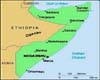
Hundreds of thousands of Somalians face a major famine because of violence and a drought that is ravaging the centre and south of the country, the International Committee of the Red Cross (ICRC) said Friday. |
|
|

| The content herein, unless otherwise known to be public domain, are Copyright 1995-2007 - SpaceDaily.AFP and UPI Wire Stories are copyright Agence France-Presse and United Press International. ESA Portal Reports are copyright European Space Agency. All NASA sourced material is public domain. Additional copyrights may apply in whole or part to other bona fide parties. Advertising does not imply endorsement,agreement or approval of any opinions, statements or information provided by SpaceDaily on any Web page published or hosted by SpaceDaily. Privacy Statement |

 del.icio.us
 Digg
Digg Reddit
 YahooMyWeb
 Google
 Facebook