
 |
 |
 |
 |
 |
 |
 |
 |
 |

 |
Chinese president arrives in Tanzania
Dar-Es-Salaam, Tanzania (AFP) Feb 14, 2009 China's President Hu Jintao arrived in Tanzania late Saturday at the start of a two-day visit to the east African country. The Chinese president arrived at 10:00pm (1900 GMT) in Dar-es-Salaam on the third leg of his African diplomatic tour following visits to Mali and Senegal. President Hu will sign key political and economic agreements with his Tanzanian counterpart Jakaya Kikwete, Tanzania's Foreign Minster Bernard Membe said. "Our two countries have good relations for over 40 years. His visit will cement the ties," Membe told reporters at a news conference. On Sunday morning, Hu will meet Tanzanian officials before opening a 56-million-dollar (43-million-euro), 60,000-seater sports complex, which had been built using Chinese loans. China is one of the ten largest investors in Tanzania, official figures show. Trade between the two countries amounted to 794 million dollars in 2007, an increase of 48.2 percent in 2006. After Tanzania, President Hu was expected Monday on the Indian Ocean island of Mauritius.
China's Hu flies to Tanzania on 3rd stop of his African tour Hu was accompanied to the airport by his Senegalese counterpart Abdoulaye Wade after the pair visited the site where a new national theatre is being built with Chinese aid. The Chinese president left Senegal with five newly signed trade pacts to boost ties between the countries under his arm. Tanzania is the next stop on his whirlwind tour of Africa which will finish in Mauritius Tuesday. Late Friday Dakar and Beijing inked a deal to set up a joint body to deepen economic, commercial and technological cooperation. Under another pact, China extended loans for new buses. A third agreement was a contract for China to buy peanut oil, the Senegalese presidency said, but did not say how much the deals were worth. After the signing Wade told Senegal's APS news agency that his country's relationship with China was not just based on "immediate material interests" but that the countries shared "a common vision on human development, peace and cooperation". "The projects come after, we are not here to negotiate (cooperation and aid) projects," Wade insisted. However he acknowledged: "the projects are useful for a country like Senegal". Dakar and Beijing restored diplomatic ties in 2005 after a 10-year hiatus over Senegal's recognition of Taiwan. Hu's visit is widely seen as a reward to Dakar for returning to the fold of its one-China policy. China is criticised in the West over its drive to secure natural resources from African states, including from regimes spurned by the West, and Hu has been anxious on his trip to push forward talk of investment and debt-relief. During his stop in Mali Hu spoke of the need for China to strengthen relations with Africa during this time of economic crisis and promised more investment and debt relief for African countries. China's economy has boomed in recent years, driving oil and other commodity prices to record highs in a scramble for raw materials. The African continent has become a key focus in its efforts to secure supplies. Beijing is often accused of giving little in return and Hu's trip to four less resource-rich African nations -- Mali, Senegal, Tanzania and Mauritius -- has been seen as a move to counter such claims. Official Chinese figures show trade between China and Africa jumped 45 percent in 2008, with Chinese exports to the continent up 36.3 percent and its imports, mainly oil, soaring 54 percent. Western critics of China's growing role in Africa accuse Beijing of acting in a colonial fashion, focusing only on its own interests, and dealing with outcast regimes, as in Sudan. Beijing has strongly rejected such criticism, insisting that its involvement is even-handed and of mutual benefit to it and its African partners. Mali and Senegal both have significant resources. Mali is Africa's third biggest gold producer, one of its biggest cotton producers and has recently discovered uranium deposits while Senegal has iron ore, some gold and untapped oil reserves. In the past few years, China has ramped up its cooperation and aid efforts in both Mali and Senegal, focusing on infrastructure projects, healthcare and education. The World Bank has praised Chinese involvement in Africa saying it has added badly needed new infrastructure that can play an important role in the fight against poverty.
China's Hu wraps up Senegal visit Hu met with senior political figures on Saturday morning and was set to be shown around the site where the new national theatre is being built with Chinese aid before flying on to Tanzania to continue his whirlwind visit of four African countries. Late Friday China and Senegal signed five trade pacts to boost ties between the countries, setting up a joint body to deepen economic, commercial and technological cooperation. Under another pact, China extended loans for new buses. A third agreement was a contract for China to buy peanut oil, the Senegalese presidency said, but did not say how much the deals were worth. After the signing Wade told Senegal's APS news agency that his country's relationship with China was not just based on "immediate material interests" but that the countries shared "a common vision on human development, peace and cooperation". "The projects come after, we are not here to negotiate (cooperation and aid) projects," Wade insisted. Still, he admitted, "the projects are useful for a country like Senegal". Dakar and Beijing restored diplomatic ties in 2005 after a 10-year hiatus over Senegal's recognition of Taiwan. Hu's visit is widely seen as a reward to Dakar for returning to the fold of its one-China policy. China is criticised in the West over its drive to secure natural resources from African states, including from regimes spurned by the West, and Hu has been anxious on his trip to push forward talk of investment and debt-relief. During his stop in Mali Hu spoke of the need for China to strengthen relations with Africa during this time of economic crisis and promised more investment and debt relief for African countries. China's economy has boomed in recent years, driving oil and other commodity prices to record highs in a scramble for raw materials. The African continent has become a key focus in its efforts to secure supplies. Beijing is often accused of giving little in return and Hu's trip to four less resource-rich African nations -- Mali, Senegal, Tanzania and Mauritius -- has been seen as a move to counter such claims. Official Chinese figures show trade between China and Africa jumped 45 percent in 2008, with Chinese exports to the continent up 36.3 percent and its imports, mainly oil, soaring 54 percent. Western critics of China's growing role in Africa accuse Beijing of acting in a colonial fashion, focusing only on its own interests, and dealing with outcast regimes, as in Sudan. Beijing has strongly rejected such criticism, insisting that its involvement is even-handed and of mutual benefit to it and its African partners. Mali and Senegal both have significant resources. Mali is Africa's third biggest gold producer, one of its biggest cotton producers and has recently discovered uranium deposits while Senegal has iron ore, some gold and untapped oil reserves. In the past few years, China has ramped up its cooperation and aid efforts in both Mali and Senegal, focusing on infrastructure projects, healthcare and education. Share This Article With Planet Earth
Related Links Africa News - Resources, Health, Food
 Chinese president starts African tour in Mali
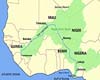 Bamako (AFP) Feb 12, 2009
China's President Hu Jintao arrived in Mali Thursday at the start of a whirlwind African tour which Beijing says is focused more on political ties than on his country's hunt for commodities. |
|
|

| The content herein, unless otherwise known to be public domain, are Copyright 1995-2007 - SpaceDaily.AFP and UPI Wire Stories are copyright Agence France-Presse and United Press International. ESA Portal Reports are copyright European Space Agency. All NASA sourced material is public domain. Additional copyrights may apply in whole or part to other bona fide parties. Advertising does not imply endorsement,agreement or approval of any opinions, statements or information provided by SpaceDaily on any Web page published or hosted by SpaceDaily. Privacy Statement |
 del.icio.us
 Digg
Digg Reddit
 YahooMyWeb
 Google
 Facebook