
 |
 |
 |
 |
 |
 |
 |
 |
 |

 |
Goddard Deputy Director Named Chairman Of OCO Investigation
Greenbelt MD (SPX) Feb 26, 2009 NASA's Rick Obenschain, deputy director at NASA's Goddard Space Flight Center in Greenbelt, Md., will lead the investigation board for the unsuccessful launch of the Orbiting Carbon Observatory on Feb. 24. The Mishap Investigation Board, or MIB, will have four other members. NASA will announce the names of additional members as they become available. The board will gather information, analyze the facts, and identify the failure's cause or causes and contributing factors. The MIB will make recommendations for actions to prevent a similar incident. Obenschain shares responsibility for executive leadership and overall direction and management of Goddard and its assigned programs and projects. He also is responsible for providing executive oversight and technical evaluation for the development and delivery for Goddard space systems launch and operations. Previously, Obenschain was appointed director of the Flight Projects Directorate in September 2004, and was responsible for the day-to-day management of more than 40 space and Earth science missions. He has held a number of project management positions at Goddard. Obenschain is the recipient of NASA's Distinguished Service Medal, Exceptional Service Medal, Outstanding Leadership Medal, Equal Opportunity Medal, and Goddard's Award of Merit. In 1995, he received the American Institute of Aeronautics and Astronautics von Braun Award for Excellence in Space Program Management. Share This Article With Planet Earth
Related Links OCO Mission Site Launch Pad at Space-Travel.com
 Kepler One Step Closer To Launch
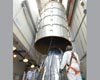 Cape Canaveral FL (SPX) Feb 25, 2009
In the mobile service tower on Launch pad 17-B at Cape Canaveral Air Force Station in Florida, the upper part of the metal transportation canister is removed from around NASA's Kepler spacecraft. |
|
|

| The content herein, unless otherwise known to be public domain, are Copyright 1995-2007 - SpaceDaily.AFP and UPI Wire Stories are copyright Agence France-Presse and United Press International. ESA Portal Reports are copyright European Space Agency. All NASA sourced material is public domain. Additional copyrights may apply in whole or part to other bona fide parties. Advertising does not imply endorsement,agreement or approval of any opinions, statements or information provided by SpaceDaily on any Web page published or hosted by SpaceDaily. Privacy Statement |

 del.icio.us
 Digg
Digg Reddit
 YahooMyWeb
 Google
 Facebook
