
 |
 |
 |
 |
 |
 |
 |
 |
 |

 |
Hong Kong studies effectiveness of vaccine after bird flu outbreak
Hong Kong (AFP) Dec 10, 2008 Hong Kong's government said Wednesday it was looking at whether there was a need to change the vaccine used to protect chickens against avian flu after the latest outbreak at a local poultry farm. Health secretary York Chow said the bird flu virus had mutated, a day after the government confirmed that some chickens from a farm in the New Territories area of Hong Kong, near the border with mainland China, had died of the H5 virus. "This virus has mutated slightly over the last six years, although it has not turned into a human-to-human, or more serious type of virus," he told reporters. "Because of the mutation of the virus, we have asked the University of Hong Kong and the mainland to conduct research to find out if there is a need to (replace the H5N2 vaccine) by the H5N1 vaccine." The H5N2 vaccine currently used on chickens is manufactured in the Netherlands and was considered to be the most effective vaccine of its type during the last outbreak in Hong Kong in 2003, he said. Chow added that about 90,000 chickens would have been slaughtered by the end of this week, including 60,000 on the farm at the centre of the outbreak. Hong Kong was the scene of the world's first reported major bird flu outbreak among humans in 1997, when six people died. Scientists fear the H5N1 strain of the virus could mutate into a form which is much more easily transmissible between humans, triggering a global pandemic. Share This Article With Planet Earth
Related Links Epidemics on Earth - Bird Flu, HIV/AIDS, Ebola
 UNICEF seeks 17.5 mln usd to tackle Zimbabwe cholera epidemic
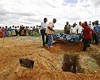 Geneva (AFP) Dec 9, 2008
The United Nations children's fund said Tuesday it needed 17.5 million dollars (13.6 million euros) to tackle the cholera epidemic in Zimbabwe amid warnings tens of thousands of people could perish. |
|
|

| The content herein, unless otherwise known to be public domain, are Copyright 1995-2007 - SpaceDaily.AFP and UPI Wire Stories are copyright Agence France-Presse and United Press International. ESA Portal Reports are copyright European Space Agency. All NASA sourced material is public domain. Additional copyrights may apply in whole or part to other bona fide parties. Advertising does not imply endorsement,agreement or approval of any opinions, statements or information provided by SpaceDaily on any Web page published or hosted by SpaceDaily. Privacy Statement |

 del.icio.us
 Digg
Digg Reddit
 YahooMyWeb
 Google
 Facebook