
 |
 |
 |
 |
 |
 |
 |
 |
 |

 |
Navy Targets Unmanned Aircraft
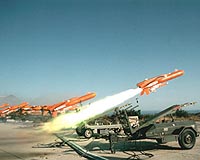
London, UK (SPX) Dec 11, 2008 There are 11 squadrons based at Royal Naval Air Station Culdrose comprising helicopters, Hawk jets, Jetstream turboprop aircraft and, perhaps less well known, a squadron of radio-controlled target aircraft. The unmanned radio-controlled target aircraft, operated by 792 Naval Air Squadron (NAS), are used in missile training around the remoter parts of the west coast of Britain as well as being deployed from ships at sea. Recently updated to the Mirach Aerial Target Drone, which has similar characteristics to an 'UAV' (Unmanned Aerial Vehicle), 792 Squadron provides target opportunities for ships' missile systems and for fighter aircraft during weapon systems testing and training. The Mirach has an advanced digital global positioning system and navigation computer which allows it to maintain pinpoint accuracy during target presentations and there are numerous role configurations that can be fitted to the target system. For example flare dispensers for missile homing, smoke plumers for visual indication, and a capability to tow a small target behind the main target on 100ft (30m) of Kevlar cable. The target is launched by electrical ignition of the disposable rocket motors which are fitted on either side of the Mirach's rear section. These rockets each provide around eight tonnes of thrust which, in addition to the unmanned aircraft's internal jet engine, propel the Mirach from standstill to approximately 350 knots (648 km/h) in two seconds and to a maximum airspeed of 530 knots (981 km/h). Commanding Officer of 792 Naval Air Squadron, Lieutenant Commander Alan Rogers said: "792 NAS plays a most vital role in the provision of a realistic threat simulation for the Type 42 Sea Dart missile system and trials aircraft of the Royal Air Force. In the Mirach 100/5 Aerial Target System we use state of the art technology to ensure our missile systems are fully tested prior to a ship deploying to operational areas, thereby giving the operating crews the opportunity to hone their skills and instil confidence in their ship's self defence systems." Recent deployments include Benbecula, in the Outer Hebrides, for in-service firings for the Typhoon aircraft's missile system, and a high seas firing for the Sea Dart missile system of HMS Manchester, a Type 42 Destroyer, helping prepare the ship for operations around the world. RNAS Culdrose is one of Europe's largest helicopter bases and delivers highly capable Helicopter Squadrons specialising in Anti-Submarine Warfare, Anti-Surface Warfare and Airborne Surveillance and Control. Its frontline Squadrons are deployed to ships all over the world to support the Royal Navy in its global operations. Back at the Air Station, trainee Aircrew, Engineers, Air Traffic Controllers, Fire-fighters and Flight Deck crews undergo intensive training prior to joining Naval Air Squadrons for duties at sea. Additionally, the 'Search and Rescue' Squadron is on constant standby 365-days a year to react to emergencies throughout the south-west region. Its red and grey helicopters can be seen braving all types of weather responding to calls for help on land and sea. Share This Article With Planet Earth
Related Links Royal Naval Air Station Culdrose UAV News - Suppliers and Technology
 Successful Autoland Of The F-16 Fighting Falcon
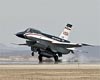 Palmdale CA (SPX) Dec 11, 2008
Lockheed Martin and the U.S. Air Force Test Pilot School at Edwards Air Force Base, Calif., have successfully demonstrated an autonomous landing of the F-16 Fighting Falcon, marking the first time an F-16 has landed entirely under computer control. |
|
|

| The content herein, unless otherwise known to be public domain, are Copyright 1995-2007 - SpaceDaily.AFP and UPI Wire Stories are copyright Agence France-Presse and United Press International. ESA Portal Reports are copyright European Space Agency. All NASA sourced material is public domain. Additional copyrights may apply in whole or part to other bona fide parties. Advertising does not imply endorsement,agreement or approval of any opinions, statements or information provided by SpaceDaily on any Web page published or hosted by SpaceDaily. Privacy Statement |
 del.icio.us
 Digg
Digg Reddit
 YahooMyWeb
 Google
 Facebook