
 |
 |
 |
 |
 |
 |
 |
 |
 |

 |
The Orsted Satellite - 10 Years In Space
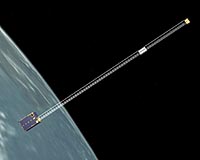
Kobenhavn, Denmark (SPX) Feb 26, 2009 On the 23 February 2009 at 11.29.55 AM Danish time, Terma takes part in celebrating the tenth anniversary of the launch of the first all-Danish satellite Orsted. For Denmark and for Terma, this is a significant event. Terma managed the development of the complete mission and operations of the micro-satellite system, and the Orsted project is a good example of how space projects can contribute to a major technology boost within the industrial sector. In connection with Orsted, Terma developed brand new technologies and functions within space applications. Terma designed the spacecraft electronics and software, its highly specialized boom structure to facilitate the measurements with extremely sensitive magnetic instruments, as well as the ground control structure to operate the satellite in its orbit. The Orsted satellite is a significant technical achievement - the satellite has been awarded an honorable fourth place by the Danish Society of Engineers in the competition for "The 20th century's greatest Danish technical achievement". Thus, a technical achievement with Terma's name on it!
Celebrating 10 years in space Share This Article With Planet Earth
Related Links Tycho Brahe Planetarium Space Technology News - Applications and Research
 NASA mission to monitor carbon dioxide fails
 Washington (AFP) Feb 24, 2009
The module carrying a satellite to monitor global carbon dioxide emissions failed to separate from its rocket soon after it was launched early Tuesday, NASA said. |
|
|

| The content herein, unless otherwise known to be public domain, are Copyright 1995-2007 - SpaceDaily.AFP and UPI Wire Stories are copyright Agence France-Presse and United Press International. ESA Portal Reports are copyright European Space Agency. All NASA sourced material is public domain. Additional copyrights may apply in whole or part to other bona fide parties. Advertising does not imply endorsement,agreement or approval of any opinions, statements or information provided by SpaceDaily on any Web page published or hosted by SpaceDaily. Privacy Statement |
 del.icio.us
 Digg
Digg Reddit
 YahooMyWeb
 Google
 Facebook