
 |
 |
 |
 |
 |
 |
 |
 |
 |

 |
The Role Of Habitat For Species Responding To Climate Change
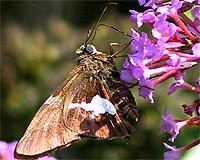
Exeter, UK (SPX) Feb 27, 2009 Most wild species are expected to colonise northwards as the climate warms, but how are they going to get there when so many landscapes are covered in wheat fields and other crops? A new study shows it is possible to predict how fast a population will spread and reveals the importance of habitat conservation in helping threatened species survive environmental change Published in the journal Proceedings of the Royal Society B, the research tracks the recovery of a rare British butterfly over 18 years and offers hope for the preservation of other species. Conducted by the Universities of Exeter, York and Sheffield and funded by the Natural Environment Research Council, the study could inform future conservation policy to help safeguard vulnerable species against the effects of climate change and habitat destruction. The silver-spotted skipper is a rare butterfly confined to chalk grasslands in southern England. 80% of such habitats were destroyed in the twentieth century as a result of changes to farming. By 1982 there were fewer than 70 populations of the species, almost all in five networks of chalk hills, and covering an area of only two square kilometres (less than a square mile). Between 1982 and 2000 a number of conservation measures helped rescue the species from extinction, including reintroducing grazing livestock. The species has also benefited from warmer temperatures resulting from climate change. By 2000, the butterfly had expanded its distribution by colonizing suitable areas of habitat, and occupied an area measuring 21km2, ten times larger than in 1982. However, it only expanded up to 30 km from its existing colonies, and in most regions the range expansions were much shorter. The research team applied a mathematical model to the geographical spread of the butterfly. They concluded that the recovery of the species depended on the quality and proximity of suitable chalk grassland. In other words, the 'fragmentation' of suitable habitat by human activity held up the rate at which the butterfly could spread through the landscape. The upside was that the researchers could accurately predict how far the species expanded in different landscapes. This suggests that a similar model could be used to predict the conservation activities which most benefit the recovery of this and other rare species. Lead author Dr Rob Wilson of the University of Exeter said: "Natural habitats are becoming increasingly fragmented, and many species are now confined to tiny suitable areas. To safeguard these species for the future we need to know where to manage habitat - not just to save the few remaining populations, but to bring about genuine recovery. The results of our study show that it may be possible to develop conservation programmes which will increase recovery rates for such species." Dr Zoe Davies, a collaborator on the paper from the University of Sheffield, said: "Climate change has allowed the silver-spotted skipper to use a wider range of habitats now than in the past. But, even so, the butterfly has barely been able to expand its distribution through a landscape which has been heavily modified by human activity." Co-author Professor Chris Thomas, of the University of York, added: "Many species will need to move their distributions to survive climate change. Such species may only be able to expand their distributions in landscapes where there is sufficient habitat to do so. We need to take action now to identify and conserve these key landscapes." Share This Article With Planet Earth
Related Links University of Exeter Darwin Today At TerraDaily.com
 Europe's bison: prehistoric survivor with Achilles' heel
 Bialowieza, Poland (AFP) Feb 26, 2009
As if straight out of prehistory, dozens of bison emerge timidly from the dark trunks of a primeval forest, their imposing bulk masking their vulnerability. |
|
|

| The content herein, unless otherwise known to be public domain, are Copyright 1995-2007 - SpaceDaily.AFP and UPI Wire Stories are copyright Agence France-Presse and United Press International. ESA Portal Reports are copyright European Space Agency. All NASA sourced material is public domain. Additional copyrights may apply in whole or part to other bona fide parties. Advertising does not imply endorsement,agreement or approval of any opinions, statements or information provided by SpaceDaily on any Web page published or hosted by SpaceDaily. Privacy Statement |
 del.icio.us
 Digg
Digg Reddit
 YahooMyWeb
 Google
 Facebook